Author: admin

  • How to Style a Silk Scarf 5 Ways (Neck, Belt, Bag, Hair, Waist)

    How to Style a Silk Scarf 5 Ways (Neck, Belt, Bag, Hair, Waist)

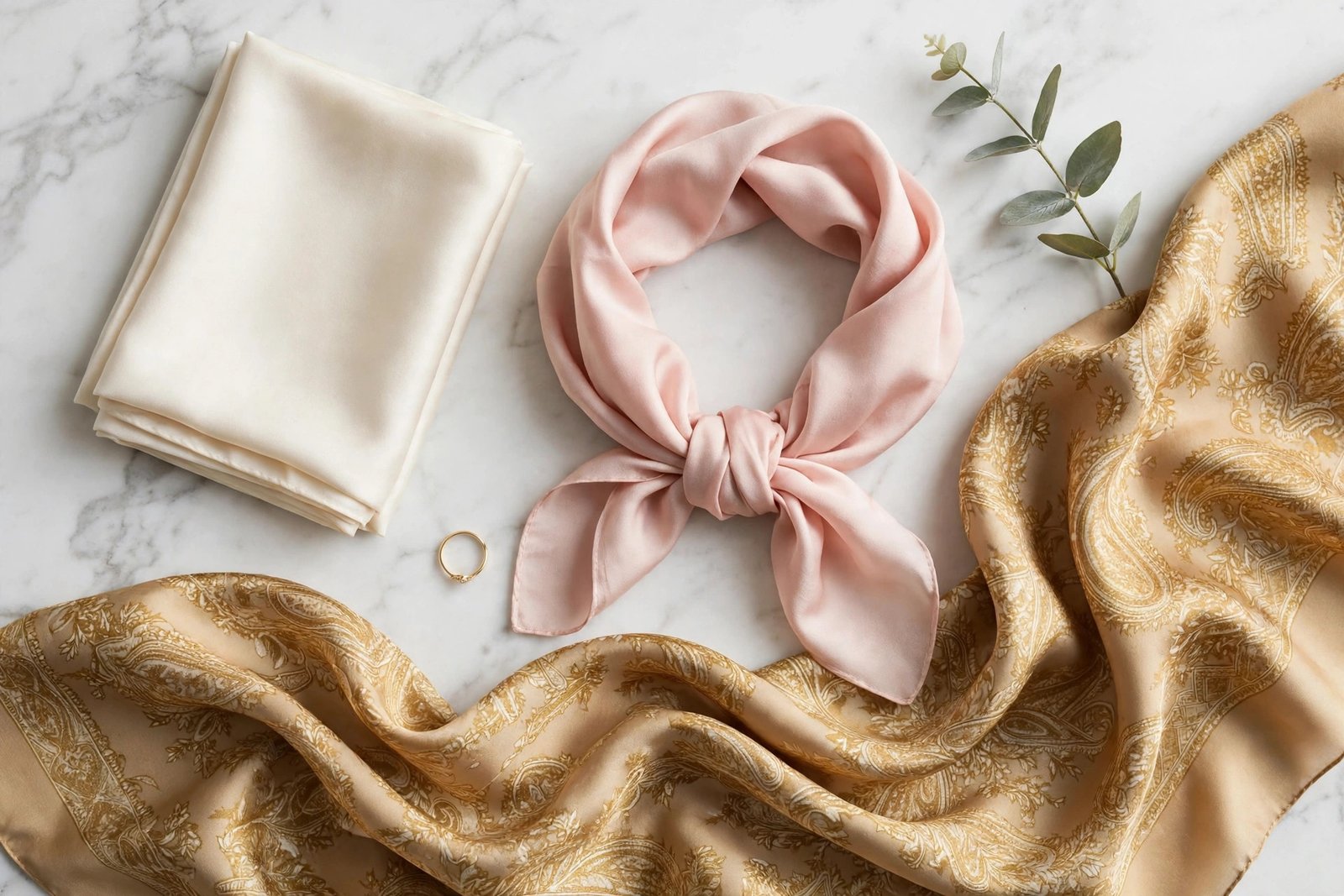
    A silk scarf might be the hardest-working small thing in your closet. It weighs almost nothing, it fits in any bag, and it can rescue a plain outfit in about thirty seconds. The best part: you probably already own one, sitting in a drawer, waiting for a reason to come out.

    Here are five ways to wear it that actually look good in real life — not on a runway, but on a Tuesday, going to lunch, going to work, going out.

    1. At the Neck: The Classic, Done Right

    This is the one everyone knows, and it still works because it frames your face. The trick is keeping the rest of the outfit simple. A small square scarf tied loosely at the neck with a white shirt, a plain sweater, or a blazer looks instantly polished — French-girl polish, without trying too hard.

    How to do it: fold the square into a triangle, roll it loosely from the point toward the long edge, drape it around your neck, and tie a small knot to one side. Let the ends hang a little uneven — perfect symmetry is what makes it look stiff.

    A longer, skinny scarf works too: wrap it once around your neck and let the ends hang, or tie a small bow at the front. Both are easy, and both make a plain top look like an outfit.

    Outfit = White shirt + straight-leg jeans + silk scarf at the neck + loafers

    2. As a Belt: The Waist Trick

    Thread a long silk scarf through your belt loops, or tie it around the waist of a simple dress, and you have an instant waistline and a pop of color in one move. This works especially well over shirt dresses and simple shift dresses that need a little definition.

    The rule here is proportion: a skinny scarf reads like a belt, while a bigger square folded into a band gives a softer, more romantic effect. Either way, tie it at the side or slightly off-center — dead center tends to look like you are trying to be a present.

    Outfit = Simple shirt dress + silk scarf as a belt + ankle boots

    3. On Your Bag: The Instant Refresh

    Tie a scarf around your bag handle, loop it through a strap ring, or knot it in a bow at the corner of a tote, and your whole bag looks new. This is the lowest-effort trick in this guide, and one of the most effective.

    It is also the best way to add color to a neutral bag without buying a new one. A black tote with a printed scarf tied at the handle suddenly has a personality. A tan crossbody with a silk twilly wrapped around the strap looks like you thought about it — because you did, for about ten seconds.

    Outfit = Neutral tote or crossbody + printed silk scarf on the handle + your usual outfit

    4. In Your Hair: The Romantic One

    A silk scarf in the hair is the move that gets compliments. Fold it into a headband and tie it at the nape of your neck for a classic look, wrap it around a low ponytail or bun for something softer, or braid it into a plait for a pop of print.

    This works best when the rest of your hair is simple — a low bun, a loose ponytail, or hair worn down with the scarf as a band. If your outfit is already busy, pick a scarf in a single color rather than a loud print, so the hair detail does not fight the clothes.

    Outfit = Low bun + silk scarf headband + simple blouse + jeans

    5. At the Waist Over Jeans: The Casual Version

    The fifth way is really the belt trick’s casual cousin: knot a silk scarf through the belt loops of high-waisted jeans, or tie it at the waist over a tucked-in tee. It turns jeans-and-a-tee from “I just threw this on” into “I actually thought about this,” which is a useful upgrade for weekends.

    Pair it with a plain top so the scarf gets to be the interesting part. A striped tee, a white tee, or a simple knit all work.

    Outfit = High-waisted jeans + tucked-in tee + silk scarf at the waist + loafers or sneakers

    Choosing the Right Scarf for Each Job

    • Neck: A small square or a skinny scarf. Lightweight silk drapes best.
    • Belt or waist: A long, narrow scarf, or a large square folded into a band.
    • Bag: Any size — even a small twilly works, and it is the easiest place to use a bold print.
    • Hair: A square for a headband, a skinny scarf for wrapping a ponytail or braid.

    And one care note that saves heartbreak: silk likes gentle treatment. Hand wash in cold water with a silk-friendly detergent, skip the bleach and the spin cycle, and air dry flat. Iron on low with a cloth between the iron and the silk.

    FAQ

    What size scarf do I need for all five ways?

    A large square (around 70 cm or bigger) is the most versatile — it folds into a band for the waist, ties at the neck, wraps hair, and knots on a bag. A skinny scarf is best for the belt and hair-wrap versions.

    Can I wear a silk scarf with casual clothes?

    Yes — that is the whole point. A scarf with jeans and a tee is one of the easiest ways to look polished without dressing up. Keep the rest of the outfit simple and let the scarf be the accent.

    How do I keep a silk scarf from slipping out of my hair?

    Tie it over a low bun or ponytail that already has an elastic in it, and knot it snugly at the nape. A little texture in your hair helps too — freshly washed, slippery hair is the hardest to work with.

    Is the silk scarf trend still going in 2026?

    Yes. Styling coverage for 2026 notes the silk scarf as a major accessory trend, appearing on spring runways and in street style, with the quiet-luxury effect of making simple outfits look considered.

    Keep Reading on Chic Threads

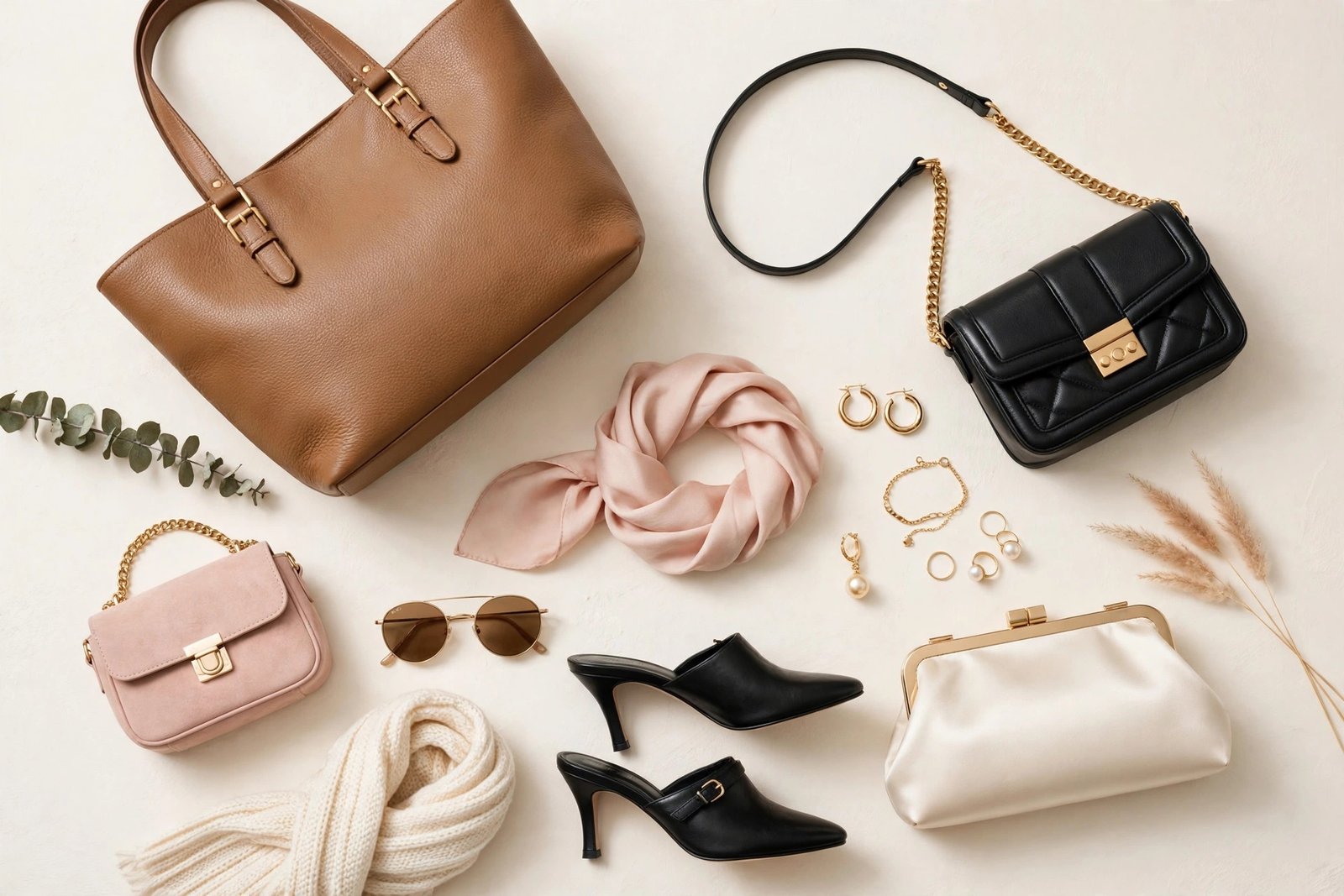
  • The Capsule Handbag Collection: 4 Bags That Cover Work, Weekend & Evening

    The Capsule Handbag Collection: 4 Bags That Cover Work, Weekend & Evening

    Open a bag lover’s closet and you will usually find one of two things: a dozen bags, of which three get used, or a small rotation where every bag earns its place. This guide is for the second kind of closet.

    The idea is simple. Instead of buying a new bag for every outfit, you build a collection of four shapes that cover everything: work, weekends, errands, and evenings out. Get these four right, in colors that work with your wardrobe, and you will stop standing in front of your closet wondering which bag goes with what.

    Bag 1: The Structured Tote (Work)

    This is the workhorse. A medium-to-large tote with a defined shape, sturdy handles, and enough room for a laptop or tablet, a wallet, keys, and a small pouch. Black, navy, or taupe are the most versatile colors — they look professional with everything from tailored trousers to a simple dress.

    Structure is the whole point here. A tote that holds its shape looks polished even when it is full, while a soft, collapsing tote can look messy by lunchtime. Look for a reinforced base and an interior that keeps things from sliding into one big pile.

    Outfit = Tailored trousers + blouse + blazer + structured tote

    Bag 2: The Crossbody (Weekend & Errands)

    For days when you want to travel light — weekend errands, city exploring, a farmers market morning — a compact crossbody is essential. It keeps your hands free, your valuables close, and your look effortless.

    A neutral crossbody in tan or black goes with nearly everything, which is exactly what you want from a bag you will grab without thinking. If your wardrobe is mostly neutrals, this is also the bag where a soft color — olive, burgundy, or warm caramel — adds personality without clashing.

    Outfit = Straight-leg jeans + knit sweater + crossbody + white sneakers

    Bag 3: The Relaxed Shoulder Bag (Everyday Softness)

    Every collection needs a bag that is not trying so hard. A suede hobo or a soft leather shoulder bag fills that role: it is the bag for brunch, for a walk with a friend, for days when you want to look put together but feel comfortable.

    This is where texture does the work. A suede or pebbled finish adds warmth to simple outfits — a knit and jeans suddenly look considered when the bag has a beautiful texture. Keep the color in the same family as your most-worn coats and boots, and it will pair itself.

    Outfit = Midi skirt + chunky knit + relaxed shoulder bag + ankle boots

    Bag 4: The Evening Clutch (After Dark)

    The fourth bag is small on purpose. An evening clutch or a mini bag with a chain strap holds the essentials — phone, card case, keys, lipstick — and nothing else. That is the point: an evening bag is not supposed to carry your day.

    For maximum wear, choose a classic shape in a neutral or metallic finish. A black clutch with gold or silver hardware works with almost every evening outfit, and a small chain strap means you can wear it hands-free when you need to. Style guides consistently recommend keeping it classic and neutral so it works across seasons and occasions, and big enough for the true essentials without being bulky.

    Outfit = Slip dress or tailored jumpsuit + evening clutch + heeled sandals or boots

    How the Four Work Together

    Here is the test of a good capsule: each bag should cover occasions the others do not, and no two bags should do the same job. The tote handles work and heavy days. The crossbody handles hands-free days. The shoulder bag handles soft, everyday days. The clutch handles evenings.

    If you already own two of these, you do not need to start over. Fill the gaps first. The most common missing piece is the evening bag — it is the one people put off buying, and then borrow or go without at every event.

    Choosing Colors That Actually Match Your Closet

    Before you buy, look at your wardrobe, not at the bag. What colors do you wear most? Your bags should live in that same family. If you wear a lot of black and navy, a black tote and a tan crossbody will cover you. If you wear warm tones — camel, olive, rust — cognac and chocolate bags will feel natural.

    One simple rule: your first three bags should be neutrals. Save color and texture experiments for bag four, or for a seasonal accent later.

    FAQ

    How many bags do I really need?

    Four covers nearly every occasion for most women: work, hands-free days, everyday softness, and evenings. Some guides suggest five, adding a seasonal accent — but four is the honest core.

    Should all four bags be the same color?

    No. Keep them in the same color family as your wardrobe, but vary them: a black tote, a tan crossbody, a brown shoulder bag, and a metallic or black clutch gives you range without clashing.

    What size should a work tote be?

    Big enough for your daily essentials — laptop or tablet, wallet, keys, water bottle — with a structured shape that still looks polished when full. If it collapses when you set it down, it is too soft for work.

    Is a mini bag practical, or just decorative?

    As an evening bag, it is practical for exactly what evenings require: phone, cards, keys, lipstick. It is not meant to replace your day bag, and judging it by day-bag standards is how people end up disappointed.

    Keep Reading on Chic Threads

    Save this guide before your next bag purchase. Four good bags, chosen well, will out-style twelve random ones every single time.

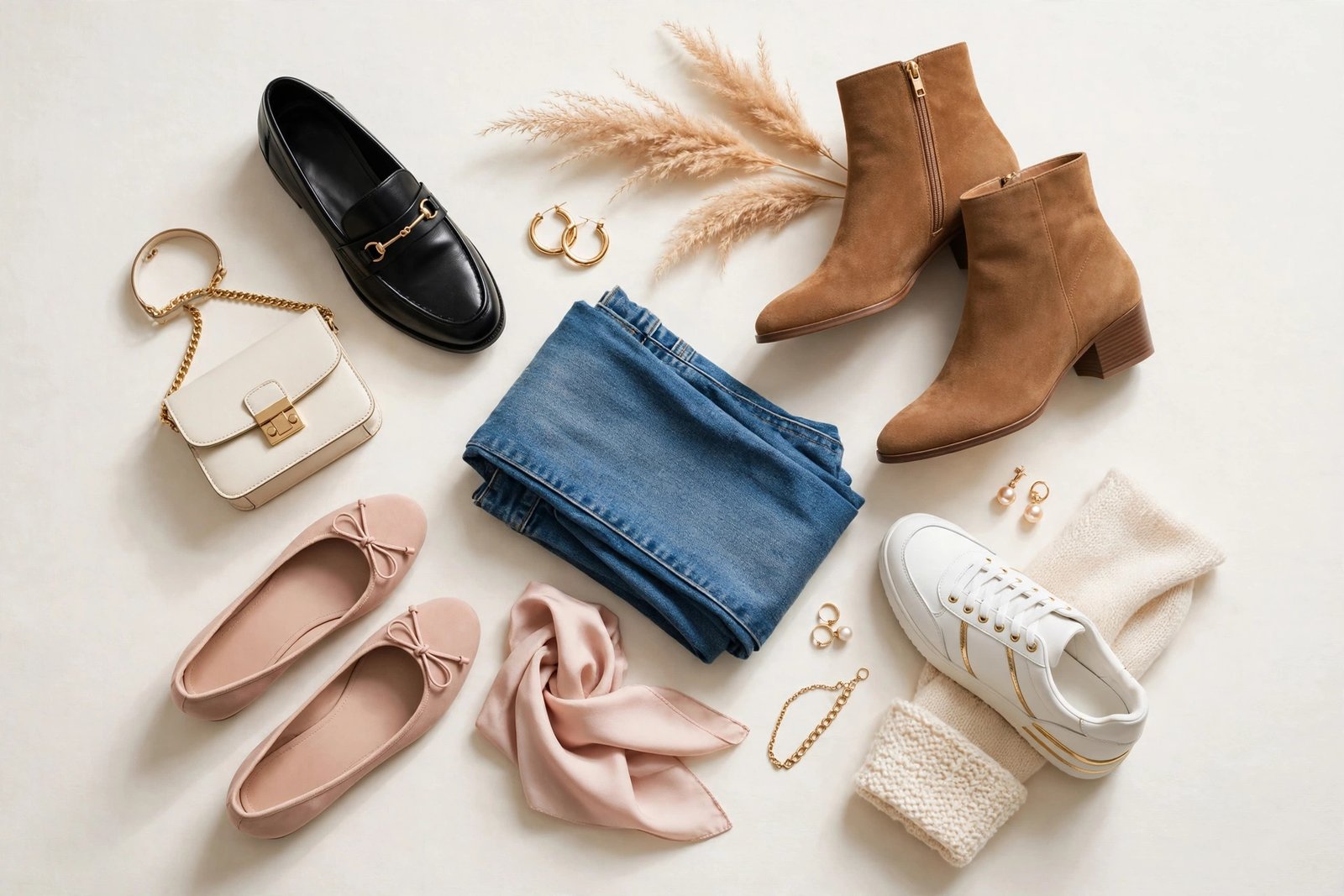
  • What Shoes to Wear With Jeans: Every Fit, From Skinny to Wide-Leg

    What Shoes to Wear With Jeans: Every Fit, From Skinny to Wide-Leg

    You can change an entire outfit just by changing the shoes. The same pair of jeans goes to the office, to brunch, and out to dinner — the shoes do the talking. But every jean fit has its own rules, and getting them wrong is usually what makes an outfit feel “off” without you knowing why.

    Here is the whole thing, fit by fit, with the one rule that ties it all together: look at the shape of the leg first, then pick the shoe.

    Skinny Jeans: Keep It Slim

    Skinny jeans hug the leg all the way down, so the shoe should stay slim too. Ankle boots, ballet flats, loafers, and pointed heels all work beautifully — they keep the line clean instead of adding bulk at the ankle.

    For everyday, a low-heeled ankle boot is the hardest-working choice. For evenings, a pointed heel instantly dresses the same jeans up. And if you want the tucked-in boot look, skinny jeans are the one fit that slides neatly into knee-high boots.

    What to skip: chunky, heavy shoes that fight the slim silhouette. They can work as a deliberate contrast, but they need the rest of the outfit to be equally bold, or the balance tips.

    Outfit = Skinny jeans + ankle boots + oversized knit + long coat

    Straight-Leg Jeans: The Easiest Fit to Shoe

    Straight-leg jeans are the most forgiving fit in your closet. They go with almost everything: loafers for a polished casual look, white sneakers for weekends, block heels when you want to dress up, and pointed ankle boots for the in-between days.

    The one detail that matters is the hem. Keep it sitting just above the shoe so the shoe actually shows — if the hem covers the shoe completely, you lose the whole point of choosing it. A slight crop or a small cuff solves this instantly.

    Outfit = Straight-leg jeans (cuffed slightly) + loafers + button-down shirt + blazer

    Wide-Leg Jeans: Add Height and a Point

    Wide-leg jeans need two things from a shoe: a little height, and a shape that does not disappear under all that fabric. Pointed toes are your best friend here — pointed flats, pointed boots, or a platform sole all extend the leg line out from under the hem.

    The goal is for the hem to just skim the floor, not drag on it. That usually means a heel or a platform. Flat, bulky shoes under wide-leg jeans tend to make the whole outfit look heavy and shapeless.

    Outfit = Wide-leg jeans + pointed block-heel boots + fitted top + cropped jacket

    Bootcut and Flare Jeans: Fill the Hem

    Bootcut and flare jeans are designed to be worn over shoes, so the shoe should fill the flare rather than hide inside it. Pointed boots, heeled ankle boots, and platform sandals all work — the flare falls over them and the pointed toe peeks out, which lengthens the leg.

    This is the fit where a heel earns its keep. Even a modest block heel changes how the flare hangs. With flats, a flare can look a little unfinished, like the jeans are waiting for the right shoe.

    Outfit = Bootcut jeans + pointed heeled boots + fitted blouse + long cardigan

    Boyfriend and Baggy Jeans: Go Chunky

    Relaxed, baggy jeans want a shoe with some attitude. Chunky sneakers, skate-style shoes, or a sturdy boot balance the looseness instead of competing with it. This is the one fit where a slim, delicate shoe can look lost.

    Roll or cuff the hem so the shoe gets some visual space, and keep the top half simple — a fitted tee or a tucked-in sweater stops the outfit from turning shapeless.

    Outfit = Boyfriend jeans (cuffed) + chunky white sneakers + fitted tee + denim jacket

    Barrel Jeans: Keep It Slim and Flat

    Barrel jeans curve out through the leg and taper at the ankle, so the shoe should stay slim and flat — ballet flats or a sleek loafer let the shape of the jean do the talking. Anything bulky at the ankle fights the curve.

    The One Rule for Every Fit

    If you remember nothing else, remember this: the hem and the shoe are a team. A hem that drags hides the shoe and shortens the leg. A hem that sits just above the shoe shows it off and keeps the line clean. Before you leave the house, check the hem in the mirror — it takes three seconds and it changes everything.

    FAQ

    What shoes go with every pair of jeans?

    If you could only own two: a clean white sneaker and a pointed ankle boot. Between them, they cover casual, smart, and dressy for nearly every fit.

    Can I wear heels with wide-leg jeans?

    Yes — in fact, wide-leg jeans usually look best with some height. A block heel or platform keeps the hem skimming the floor instead of dragging.

    Do skinny jeans still work with knee-high boots?

    Yes. Skinny jeans are the easiest fit to tuck into knee-high boots because they slide into the shaft without bunching. Just make sure the jean is slim all the way to the ankle.

    What about cropped jeans?

    Cropped jeans are made to show off shoes, so this is your moment: pointed flats, ankle boots, loafers, or a strappy heel all shine when the ankle is visible.

    Can I wear flats with flare jeans?

    You can, but a pointed flat works better than a round one — the pointed toe extends the leg line under the flare. A small heel is usually more flattering, though.

    Keep Reading on Chic Threads

    Save this guide and check it next time you stand in front of the mirror wondering why an outfit feels off. Nine times out of ten, it is the shoes.

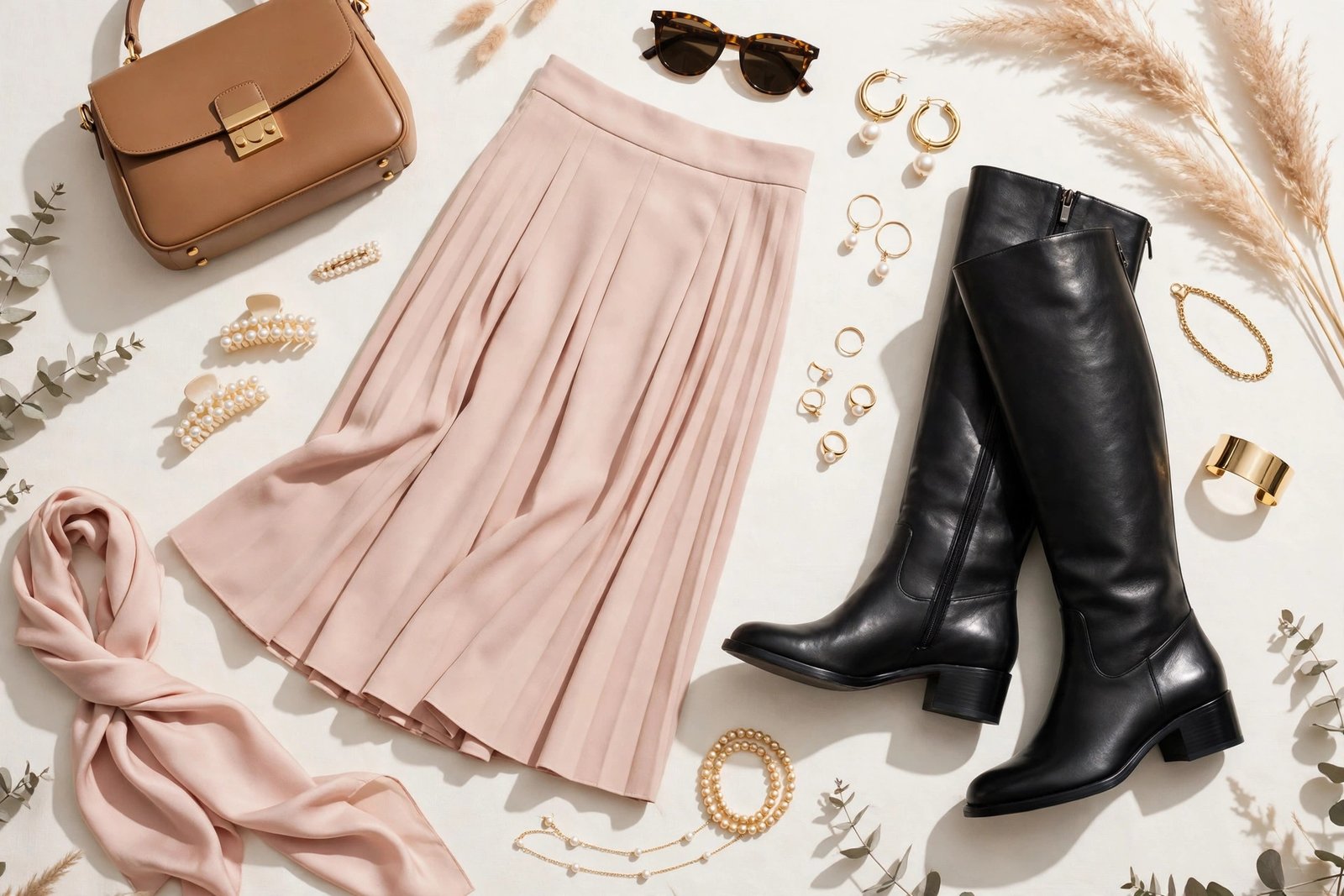
  • Knee High Boots Outfits: 7 Formulas for Midi Skirts, Dresses & Jeans

    Knee High Boots Outfits: 7 Formulas for Midi Skirts, Dresses & Jeans

    Knee-high boots are the closest thing fall has to a cheat code. They add warmth, they make legs look longer, and they turn outfits that felt summery last month into outfits that feel right now. But they also come with questions: what hem length works? Do they go with midi skirts, or does that look frumpy? Can you wear them to work?

    Yes to all of it — as long as you get the proportions right. Here are seven formulas that work, every time.

    1. The Knit Dress Uniform

    A knee-length ribbed knit dress in cream, camel, or charcoal, worn straight into brown or black knee-high boots, with a slim belt and a small scarf. Five minutes, zero decisions, always polished.

    This is the outfit to reach for on mornings when you cannot think. The boots disappear into the dress’s line, the belt gives you a waist, and the whole thing reads intentional even though you barely tried.

    Outfit = Ribbed knit dress + slim belt + knee-high boots + small scarf

    2. Dark Denim, Tucked In

    Slim or straight-leg dark jeans tucked into knee-high boots, with a cable-knit sweater or a fine roll neck. Keep the boots low-heeled and unembellished so the outfit reads city-smart rather than costume.

    The key here is the jean: it needs to be slim enough to tuck without bunching at the ankle. Straight-leg jeans work too, as long as the leg is narrow enough to slide into the shaft. If the jeans bunch, the whole look falls apart — so this is a job for your slimmest pair.

    Outfit = Dark slim jeans (tucked) + cable-knit sweater + flat knee-high boots

    3. Midi Skirt and Blazer

    A pleated or A-line midi skirt, a roll neck, and a blazer, finished with knee-high boots. The boots disappear under the hem and create one long leg line — this is the formula that makes midi skirts feel made for fall.

    One tip from stylists: if you are on the shorter side, pick a boot with a small heel for this pairing. A flat boot under a midi can feel a little heavy, while a low block heel lifts the whole outfit.

    Outfit = Pleated midi skirt + roll neck + blazer + heeled knee-high boots

    4. Work-Ready Tailoring

    A knee-length pencil skirt, a fitted sweater, and knee-high boots in the same color family for the office. Head-to-toe tonal dressing looks expensive and intentional — black boots with a charcoal skirt, or chocolate boots with a brown skirt.

    Keep the boot sleek for work: no buckles, no fringe, no western details. Clean leather, a modest heel, and you are done. Add a structured tote and you have an office outfit that is also warm enough for the walk in.

    Outfit = Pencil skirt + fitted sweater + tonal knee-high boots + structured tote

    5. The Sweater Dress, Elevated

    A sweater dress with knee-high boots is a classic for a reason — it is warm, it is one piece, and it looks put together with almost no effort. The trick is the hem: a dress that ends just above the knee, with boots that come up to just below it, gives you a clean line. If the dress ends right at the boot top, the outfit can look cut in half, so aim for a little leg showing or a dress long enough to overlap the boot.

    Add a long coat and a crossbody bag and you have a weekend outfit that also works for dinner out.

    Outfit = Sweater dress + knee-high boots + long coat + crossbody bag

    6. The Weekend Quilted Jacket

    A diamond-quilted jacket over jeans and a sweater, with riding-style boots and a structured bag. It is the countryside look, minus the countryside — polished enough for lunch in town, comfortable enough for a long walk after.

    Restraint is what keeps this modern. Pick the boots and the jacket, and let everything else stay simple. One equestrian nod is chic; the full set starts to look like a costume.

    Outfit = Quilted jacket + jeans + sweater + riding boots + structured bag

    7. The Evening Switch

    Knee-high boots are not just a daytime shoe. A heeled pair in black leather, worn with a slip-style midi dress or a fitted knit dress and a long coat, is a genuinely elegant evening look. The boots ground the dress, the coat adds drama, and you can actually walk in them — which is more than most evening shoes can say.

    Outfit = Slip midi dress + heeled knee-high boots + long coat + small evening bag

    Fit Notes That Save You Headaches

    • Shaft height matters. A knee-high shaft should hit just below the knee. If you are petite, look for slightly shorter shafts so the boot does not bunch behind your knee.
    • Measure your calf. Look for stretch panels or adjustable buckles if you need extra room, and compare the boot’s circumference to your widest calf measurement before ordering.
    • Break them in gently. Leather softens over the first few weeks of wear, so a snug start is normal — but pinching toes are not. If they pinch, they are the wrong size.

    FAQ

    Can I wear knee-high boots with a midi skirt without looking frumpy?

    Yes — the trick is a boot with a small heel and a skirt that ends either above the boot top or well below it. The awkward zone is a hem that lands exactly at the boot’s top edge.

    What jeans work tucked into knee-high boots?

    Slim or straight-leg jeans that slide into the shaft without bunching. Wide-leg jeans do not tuck — wear them over ankle boots instead.

    Are knee-high boots appropriate for the office?

    Absolutely, with a sleek, unembellished boot in black or dark brown, a modest block heel, and a knee-length or midi skirt or tailored dress.

    Flat or heeled — which is more versatile?

    Flat for everyday and weekends, low block heel for work and evenings. If you can only have one pair, a low block heel covers the most ground.

    Keep Reading on Chic Threads

    Save this one before boot season hits — seven formulas, zero morning panic.

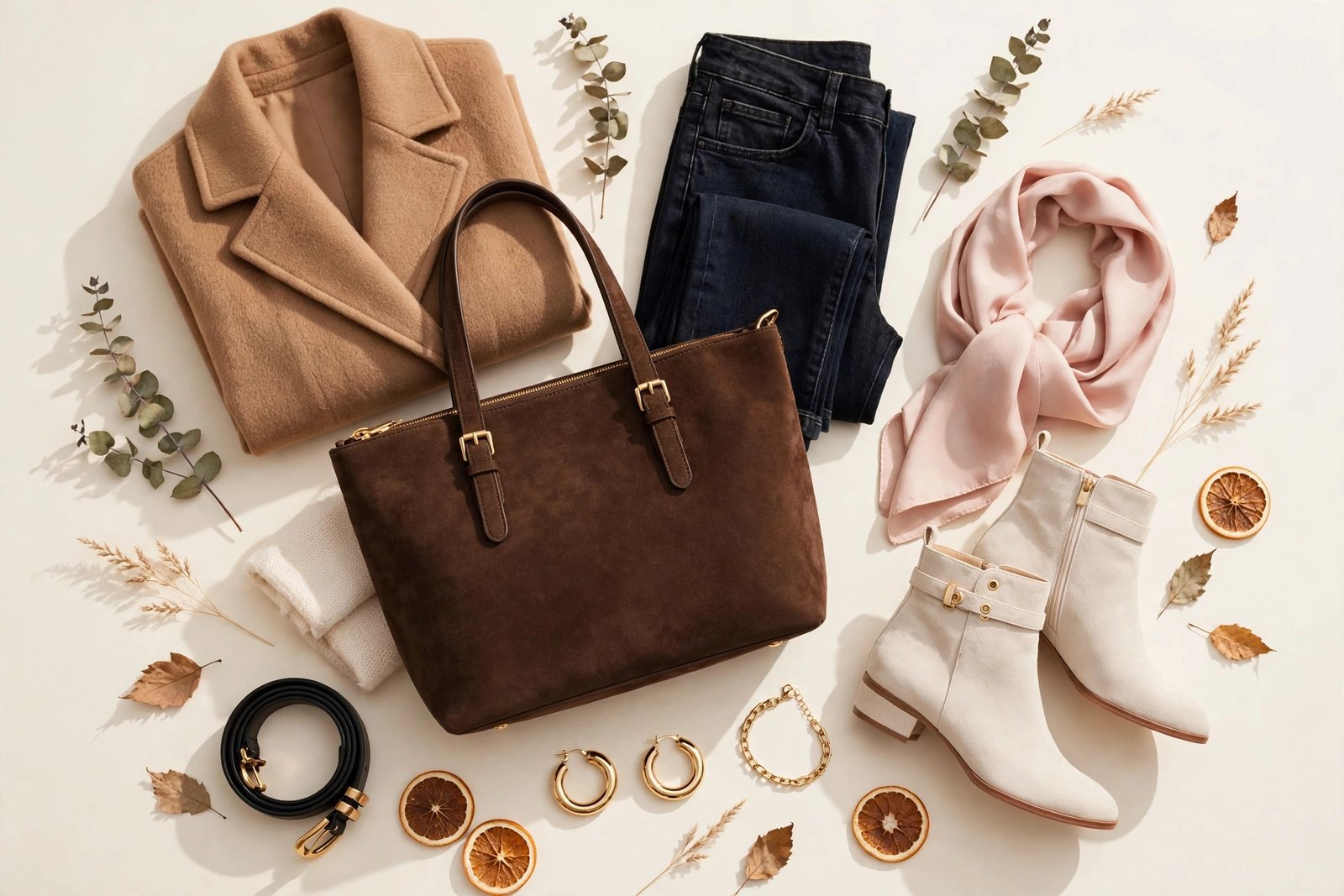
  • Suede Bags: How to Style a Suede Tote, Hobo & Satchel for Fall

    Suede Bags: How to Style a Suede Tote, Hobo & Satchel for Fall

    There is a reason suede comes back every single fall. The moment the air turns cool and knits come out of storage, a smooth leather bag can suddenly look a little too sharp — and suede softens everything it touches. It has that cozy, lived-in richness that makes even a simple sweater-and-jeans outfit feel finished.

    But suede also makes people nervous. Will it get ruined in the rain? Does it only work with certain outfits? Here is the good news: once you know which shape does what, suede is one of the easiest bags to style. Let’s walk through the three shapes worth owning — the tote, the hobo, and the satchel — and exactly how to wear each one.

    The Tote: Your Everyday Workhorse

    A suede tote is the bag you reach for when you have a full day ahead. Work, errands, a lunch date, and then straight to dinner — it carries all of it without looking like luggage.

    The trick to styling a tote is letting it be the soft part of the outfit. Pair a tan or cognac suede tote with a structured coat, a simple knit, and straight-leg jeans, and the whole look balances out: sharp on top, soft at your side. A black suede tote does the same job with darker outfits — think charcoal trousers, a cream sweater, and ankle boots.

    One practical note: suede and downpours do not mix well. If rain is in the forecast, that is the day to leave the suede at home, or give it a quick coat of suede protector spray before you head out. A soft suede brush brings the nap back to life after a day of wear.

    Outfit = Structured coat + simple knit + straight-leg jeans + suede tote + ankle boots

    The Hobo: Relaxed, But Still Polished

    The hobo is the slouchy crescent shape that sits comfortably under your arm, and it is the most forgiving bag shape there is. It does not demand a formal outfit. In fact, it looks best when everything else is a little relaxed: a chunky knit, a flowing midi skirt, a soft cardigan, and boots.

    A chocolate or burgundy suede hobo is especially good with fall’s warmer palette. Try it with an olive sweater, dark jeans, and brown boots — nothing matches exactly, and that is the point. The shared warm tones pull it together.

    Where the tote says “I have my day organized,” the hobo says “I am comfortable and I still look great.” Keep it for weekends, brunch, shopping trips, and any day you want polish without stiffness.

    Outfit = Chunky knit + midi skirt or dark jeans + suede hobo + ankle boots

    The Satchel: The One That Dresses You Up

    A satchel is structured, with a flap and a defined shape, and it is the suede bag that can walk into a meeting or a nice dinner without missing a beat. If you only buy one suede bag, many stylists would point you here, because it covers the most ground.

    Wear a black or dark brown suede satchel with a blazer and trousers for work, or with a wrap dress and heeled boots for an evening out. The structure of the bag does the dressy work, while the suede keeps it from feeling stiff or corporate.

    Size matters with a satchel. A medium size is the sweet spot — big enough for your phone, wallet, keys, and a small cosmetic pouch, but small enough to stay elegant.

    Outfit = Blazer + tailored trousers or wrap dress + suede satchel + heeled boots

    How to Choose Your Color

    If you are starting with one suede bag, go neutral: tan, cognac, chocolate, or black. Tan and cognac warm up denim and cream knits beautifully. Chocolate is the quiet luxury option — it goes with black, navy, olive, and burgundy without competing. Black suede is the most formal of the four and the easiest to wear to work.

    A second suede bag is where you can have fun: burgundy, olive, or a deep rust. These are the colors that make a plain outfit look like you planned it.

    Caring for Suede (So It Lasts More Than One Season)

    Suede care is simpler than its reputation suggests:

    • Protect first. A suede protector spray before the first wear helps repel light moisture and stains.
    • Brush it. A quick pass with a suede brush after wearing restores the soft nap.
    • Let it dry naturally. If it gets damp, stuff it lightly with tissue and let it air dry away from direct heat.
    • Store it well. Keep it in a dust bag, stuffed so it holds its shape, and out of direct sunlight.

    FAQ

    Can I wear suede in the rain?

    Light drizzle is fine if the bag has been treated with protector spray, but a real downpour is suede’s enemy. Check the forecast and swap to a smooth leather or coated bag on wet days.

    Which suede bag shape is best for work?

    The satchel, or a structured tote. Both look intentional with tailored clothes, while a slouchy hobo can read too casual for a formal office.

    Does suede go with everything?

    Almost. Suede pairs beautifully with knits, denim, wool coats, and leather boots. The one thing to watch is mixing too many textures at once — if your coat is heavily textured, keep the rest of the outfit simple.

    How do I keep a light-colored suede bag clean?

    Handle it with clean hands, spray it before first wear, and brush it regularly. Light suede will pick up color transfer from dark denim, so be mindful of brand-new dark jeans rubbing against it.

    Keep Reading on Chic Threads

    Save this one for your next fall closet refresh — the right suede bag turns outfits you already own into outfits that look brand new.