Author: admin

  • Evening Clutch & Party Bag Guide: Christmas & NYE Edition

    Evening Clutch & Party Bag Guide: Christmas & NYE Edition

    Holiday party season has one packing problem: the bag. Your everyday tote is too big, your hands are full, and you still need your phone, your keys, your lipstick, and a way to get home. The evening clutch exists for exactly this — and choosing the right one makes the whole night easier.

    Here is how to pick a party bag for Christmas, New Year’s Eve, and everything in between, and what to actually put in it.

    The Three Party Bags Worth Owning

    You do not need a collection. Three shapes cover nearly every holiday event:

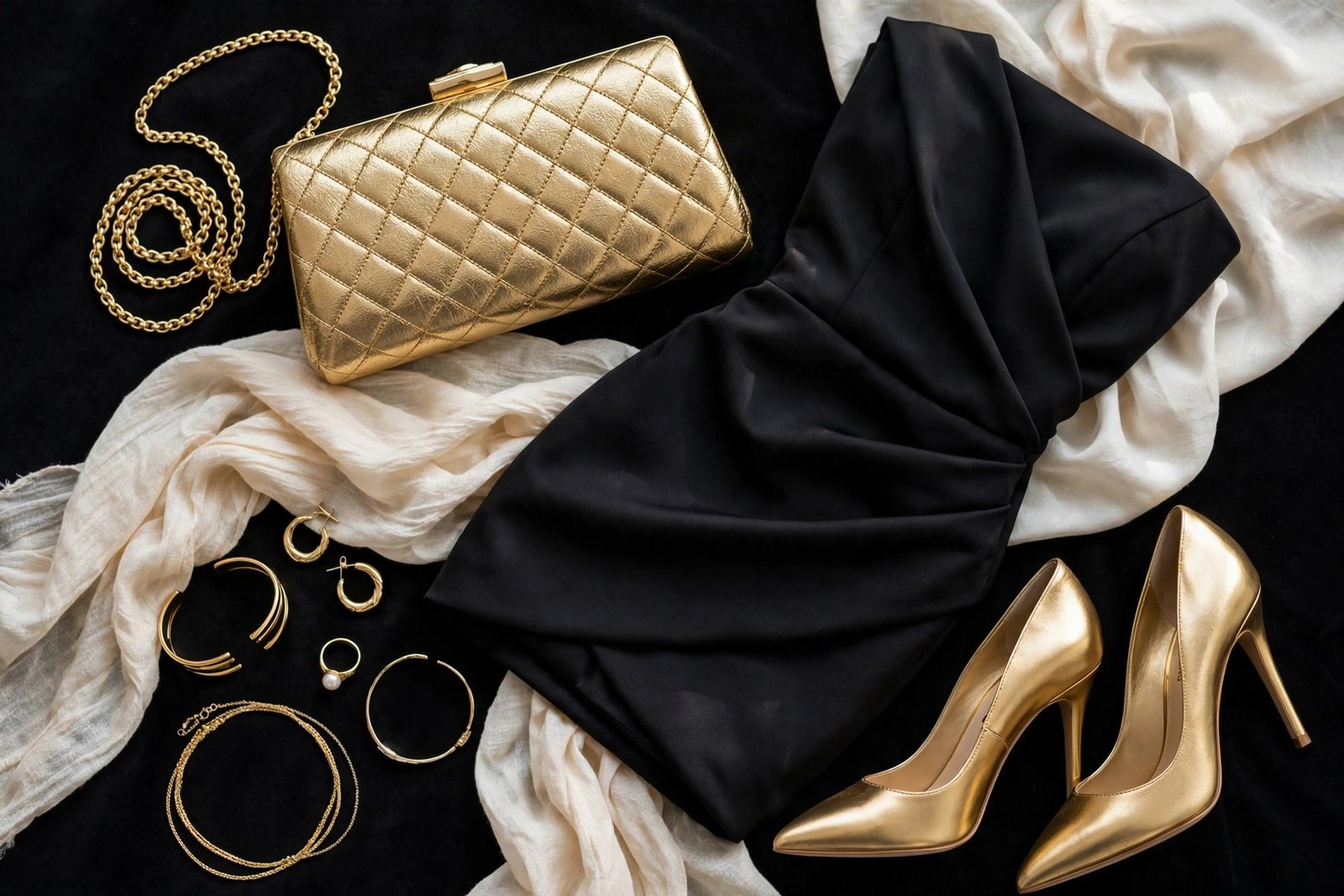
    1. The metallic clutch. Gold or silver, small, with a clean shape. This is the workhorse of party season — it catches the light, it goes with black, jewel tones, and sequins, and it works for Christmas dinner and New Year’s Eve alike. If you buy one party bag, buy this one.

    2. The velvet or satin mini bag. For softer, more romantic outfits — a velvet dress, a silk blouse, a flowing skirt. Velvet and satin read festive without sparkle, which makes them perfect for family gatherings and office parties where you want glamour without glare.

    3. The convertible crossbody. A small bag with a detachable chain or strap that converts into a clutch. This is the dancer’s bag: wear it across your body while you move, then take the strap off and carry it as a clutch for photos and dinner. For New Year’s Eve especially, hands-free is not a luxury — it is a strategy.

    Matching the Bag to the Event

    Work Christmas party: You are probably heading straight from work, so you need a bag that transitions from day to night. A small structured bag in a festive color — deep red, emerald, or metallic — works over a work outfit and still feels like a party when the lights go down. If you carry a tote during the day, pack the evening bag inside it and swap before the party.

    Family Christmas dinner: Keep it soft. A velvet mini bag or a small satin clutch in a muted tone — burgundy, forest green, or classic black — feels festive without competing with the table. Leave the heavy sparkle at home; family dinner is not a disco.

    New Year’s Eve: Go for the metallics and the sparkle. A gold or silver clutch, a sequined mini, or a crystal-embellished box clutch all belong here. This is the one night where more shine is the right call. And pick the convertible crossbody if you plan to dance — you will thank yourself at midnight.

    Black tie or formal gala: Small and elegant, always. A clutch that holds your phone, a cardholder, and makeup for touch-ups — nothing more. Match the clutch’s hardware to your jewelry: silver detailing with silver jewelry, gold with gold. That one detail ties the whole look together.

    What to Actually Carry

    An evening bag is small on purpose, so packing it is an exercise in honesty. The essentials:

    • Phone
    • Card case or a slim wallet
    • Keys
    • Lipstick or lip gloss for touch-ups
    • A portable charger if you will be out late and taking photos
    • A pain reliever or a plaster, tucked in a side pocket, for the just-in-case moments

    That is it. If it does not fit, it does not come. The biggest mistake with party bags is trying to make them do a day bag’s job — and then resenting them for being small.

    The Hardware Rule

    Match your bag’s metal hardware to your jewelry’s metal tone. A clutch with a gold chain strap pairs with gold earrings and a gold bracelet. Silver hardware pairs with silver jewelry. It is a small detail, but it is the one people notice — it makes the whole outfit look considered rather than assembled.

    The same goes for the rest of your accessories: pick three or four, not all of them at once. A clutch, a pair of earrings, a bracelet, and a wrap or shawl is plenty. Wearing every festive accessory you own at the same time is how an outfit tips from glamorous into cluttered.

    Colors That Work for the Holidays

    A sleek black clutch is classic for any party, but the holidays are the time for festive color: metallic gold and silver, deep red, emerald green, and touches of sequin, pearl, or embroidery. The trick is coordination — your bag, your jewelry, and your shoes should feel like they belong to the same outfit, even if they are not the same color.

    If your dress is already dramatic — sequins, a bold pattern, a strong color — balance it with a neutral clutch. If your dress is simple — black, navy, a clean silhouette — let the bag be the sparkle.

    FAQ

    What size should an evening clutch be?

    Big enough for your phone, a card case, keys, and lipstick — and not much more. If it cannot close comfortably with those four things inside, it is too small.

    Should my clutch match my shoes?

    It does not need to match exactly. Coordinating is enough: a gold clutch with nude heels, or a black clutch with silver shoes, both work. Matching hardware to jewelry matters more than matching the bag to the shoes.

    Can I wear a crossbody to a formal party?

    Yes, if it is small and elegant — especially a convertible one you can wear as a clutch. A large, casual crossbody does not belong at a formal event, but a small chain-strap mini absolutely does.

    What bag works for both Christmas and New Year’s Eve?

    A metallic clutch in gold or silver. It is festive enough for both, neutral enough to pair with different outfits, and it never looks out of place.

    Keep Reading on Chic Threads

    Save this one before party season starts. One good clutch, packed right, and you are ready for every invitation December sends you.
  • White Sneakers With Dresses & Skirts

    White Sneakers With Dresses & Skirts

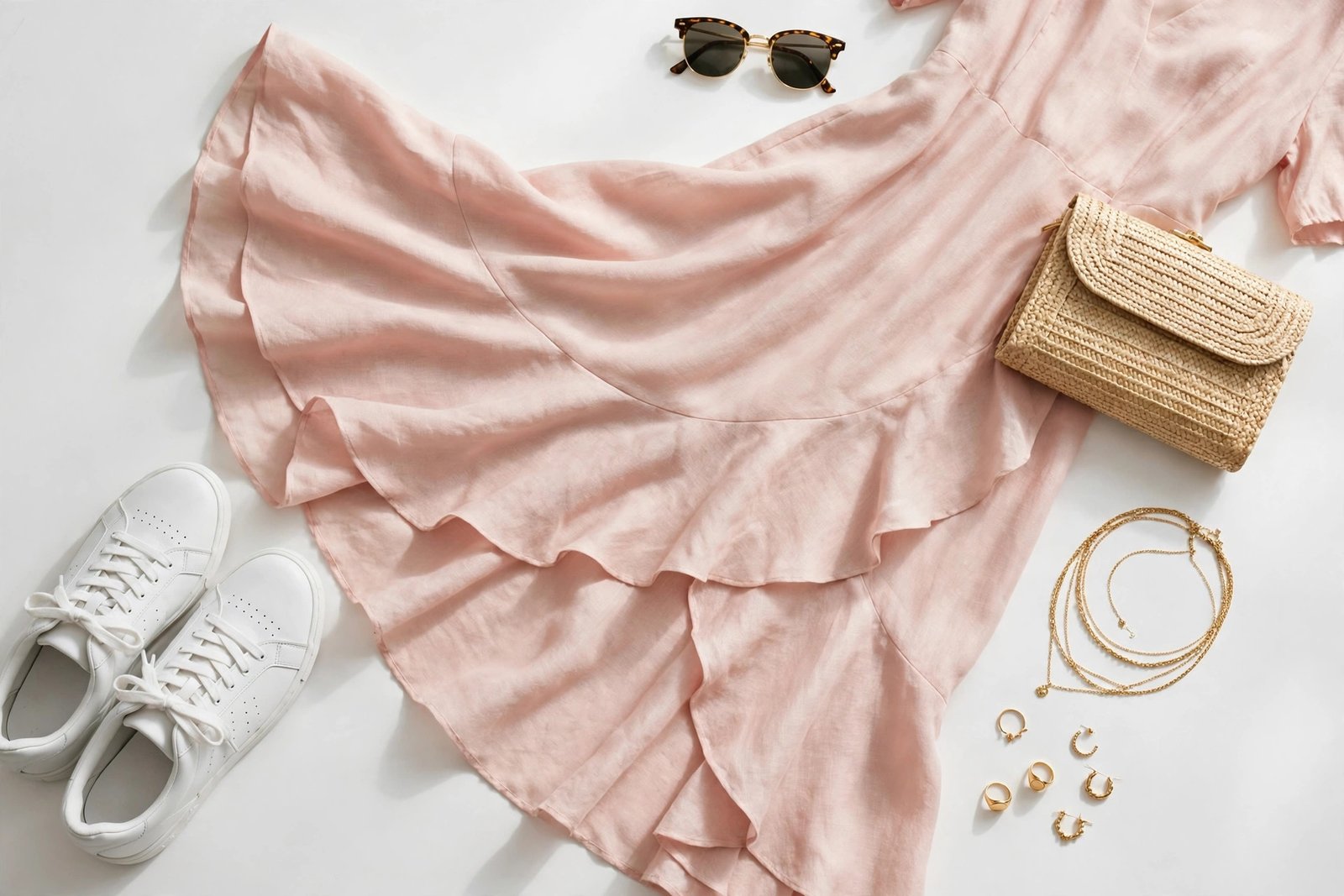
    White sneakers with a dress used to feel like a rule you were breaking. Now it is one of the most normal, most wearable looks there is — the femininity of the dress balanced by the practicality of the sneaker, and the result feels modern and relaxed instead of fussy.

    But it only works when the sneaker stays simple and the dress leads. Here is how to get it right, for every dress length and every occasion that allows it.

    The Core Rule: Let the Dress Lead

    The whole pairing works because of contrast: soft dress, clean shoe. The moment the sneaker gets loud — chunky, colorful, heavily branded — the contrast turns into a clash. A clean, low-profile white sneaker is the one that disappears in the best way, letting the dress be the interesting part.

    The second rule is just as important: keep the rest of the outfit neat. A structured bag, clean lines, one polished piece (a blazer, a structured tote) and the whole outfit reads intentional. Without that one polished piece, the outfit can read like you could not find your other shoes.

    Outfit = Flowy midi dress + low-profile white sneakers + structured crossbody bag

    By Dress Length

    Mini dresses look especially good with low-profile sneakers, keeping the focus on the legs. The sneaker stays quiet, the legs do the talking, and the whole thing feels young without trying too hard.

    Midi dresses are the sweet spot. Floral dresses, solid slip dresses, and oversized shirt dresses all work with this formula. The femininity of the dress is balanced by the practicality of the sneaker, and the result is the easiest outfit in this whole guide.

    Maxi dresses can work too, when the sneaker peeks out at the hem for a casual, effortless finish. Keep the sneaker low-profile so it does not fight the drape of the dress.

    By Skirt Type

    • A-line skirts: The classic pairing. A white sneaker grounds the flare without weighing it down.
    • Pleated midi skirts: Work beautifully, especially with a tucked-in knit or tee. The pleats move, the sneaker stays still — a nice balance.
    • Denim skirts: The easiest of all. A denim skirt and white sneakers is a weekend uniform for a reason.
    • Slip skirts: The dressier option. A satin or silk-look slip skirt with white sneakers is the high-low mix that looks like you know exactly what you are doing — just keep the sneaker very clean.

    Dressing It Up (Yes, Really)

    White sneakers can go smarter than most people think. In modern workplaces with relaxed dress codes, a tucked-in shirt, tailored trousers, and clean white sneakers read as polished without being overdressed. The same logic applies to dresses: a structured blouse dress or a tailored midi dress with white sneakers, plus a blazer, reads as intentional styling rather than a casual cop-out.

    The line is the shoe’s condition. A crisp, clean white sneaker with a tailored dress looks deliberate. A gray, scuffed one with the same dress looks like you gave up. The shoe does not need to be expensive — it needs to be clean.

    Keeping Them White (So the Outfit Works)

    This is the unglamorous part, and it matters more than the styling:

    • Wipe them down after each wear. A quick pass with a damp cloth removes dirt before it sets.
    • Deep clean with mild soap and water. A soft brush and a gentle soap solution handles tougher marks. Test on a small area first, and skip bleach or harsh chemicals — they can discolor the material.
    • Fresh laces are the cheapest refresh there is. Gray laces make a good sneaker look tired; new white laces make a tired sneaker look new.
    • Store them well. A cool, dry place, stuffed with shoe trees or newspaper to hold their shape.

    When Not to Wear Them

    White sneakers are versatile, but they are not universal. Skip them for formal events, very dressy weddings, and conservative offices. If the dress code says “formal,” the sneaker stays home — no matter how clean it is. And if the dress is heavily embellished or very formal, a sneaker will fight it rather than balance it.

    FAQ

    Can I wear white sneakers with a dress to work?

    In workplaces with relaxed dress codes, yes — especially with a tailored midi dress or a structured shirt dress, plus a blazer. Keep the sneakers clean and low-profile.

    What kind of white sneaker works best with dresses?

    A low-profile, slim silhouette. Chunky platform styles work better with wide-leg trousers and oversized blazers; with dresses, slim wins.

    Do white sneakers work with maxi dresses?

    Yes, when the sneaker peeks out at the hem. Keep it low-profile so it does not disrupt the drape of the dress.

    How do I keep white sneakers from looking dirty?

    Wipe them after each wear, deep clean with mild soap and water when needed, and replace gray laces. Condition matters more than brand or price.

    Keep Reading on Chic Threads

    Save this one for the next warm-weather morning. Dress, sneakers, out the door — done.

  • Ankle Boots With Dresses: The Complete Pairing Guide

    Ankle Boots With Dresses: The Complete Pairing Guide

    Ankle boots with a dress is one of those pairings that looks effortless when it works — and slightly off when it does not. The difference is almost always proportion: the length of the dress, the height of the boot, and the space between them.

    Once you know the three rules below, you can pair any ankle boot with any dress in your closet. Let’s get into it.

    Rule 1: Mind the Gap

    The most common mistake with ankle boots and dresses is the gap — too much bare calf showing between the boot top and a knee-length hem, which can chop the leg visually. The fixes are simple:

    • Choose a dress that ends well above the boot (a mini), or long enough to overlap it (a maxi or a longer midi).
    • Or close the gap with tights: sheer or opaque tights in a color close to the boot create one continuous line.

    The awkward zone is a hem that lands exactly at the boot’s top edge. If your dress ends there, either pick a taller boot, a shorter dress, or add tights. One small change, completely different result.

    Outfit = Black midi dress + black tights + black ankle boots (one seamless line)

    Rule 2: Match the Boot’s Weight to the Dress’s Volume

    If your dress has a lot of movement or volume, keep the boots simple. If your dress is minimal, let your boots make the statement.

    • Flowy midi dress: Sleek, streamlined ankle boots. The dress already has the drama; the boot should stay quiet.
    • Fitted midi or bodycon dress: A sleek leather boot with a pointed toe enhances the clean line and elongates the silhouette.
    • Loose smock or tunic dress: A chunkier boot with a platform sole balances the volume and grounds the look.
    • Mini dress: A heeled ankle boot with a slim shaft extends the leg line and keeps the balance.

    When in doubt, aim for continuity: the eye should travel vertically down the outfit, not get stuck at the ankle.

    Rule 3: Pick the Right Boot Style for the Dress Length

    Mini dresses pair best with heeled ankle boots — the extra height and the leg showing between hem and boot keep the proportions long.

    Midi dresses are the trickiest, and the most rewarding. A hem that ends two to three inches above the boot top avoids bulk, and a slip-on Chelsea boot or a low-heeled boot keeps the transition clean. For longer midi lengths, ankle boots create visual interest by breaking up the leg line in a deliberate way.

    Maxi dresses want a sleek, low-profile boot that peeks out at the hem. Let the dress drape slightly over the toes, and avoid wide shafts that disrupt the flow. A slim-profile boot with a slight heel is the safest choice.

    By Season: How It Changes

    Fall: A camel sweater dress over sheer tights with black ankle boots is warm and elegant. Add a long cardigan or a trench, and you have a transitional outfit that handles unpredictable weather.

    Winter: Tights become essential — opaque or fleece-lined versions in black, gray, or a tone matching your dress. Choose boots with lined interiors and slightly higher shafts to keep cold air out, and pick boots that zip or slip on easily, since lacing gets tedious with cold fingers.

    Spring: This is ankle-boot-and-dress season at its best. Lighter dresses, bare legs or sheer tights, and a boot that is more about style than warmth. A denim midi dress with leather ankle boots is a classic spring pairing — the denim keeps it casual, the leather keeps it polished.

    The Boot Styles, Decoded

    • Chelsea boots: Sleek, elastic-sided, sitting just above the ankle bone. Ideal for straight or slim-fit dresses that graze the top of the boot. The clean upper edge prevents visual chopping.
    • Heeled ankle boots: Height and elegance. Pair well with flowy midis or fitted styles to create vertical continuity.
    • Flat or lug-sole boots: A grounded, edgy feel. Best balanced with shorter hemlines or A-line cuts, so the outfit does not feel bottom-heavy.
    • Western-inspired boots: A fashion-forward statement. They bring unexpected personality to floral or denim midi dresses.

    FAQ

    Can I wear ankle boots with a midi dress?

    Yes — it is one of the best pairings, as long as the hem ends a few inches above the boot top or overlaps it. Avoid a hem that lands exactly at the boot’s top edge.

    What color ankle boots go with everything?

    Black and cognac. Black boots ground lighter fabrics and give a softer silhouette structure; cognac works with virtually any midi dress style, from floral to solid.

    Do I need tights with ankle boots and a dress?

    Not always, but tights solve the gap problem beautifully. Match tights to the boot color for the most elongating effect, and choose sheer over opaque in warmer months for a sleeker line.

    Can petite women wear ankle boots with dresses?

    Yes. The trick is a heeled ankle boot, a dress that ends above the knee or well below it, and tights that match the boot — all three keep the leg line long.

    Keep Reading on Chic Threads

    Save this one before you get dressed tomorrow. Three rules, and the ankle-boot-and-dress question is answered for good.

  • Loafers Outfits for Work & Weekend

    Loafers Outfits for Work & Weekend

    There is a reason loafers never really leave. They are the shoe that lets you walk all day, look like you mean business, and still feel like yourself. No breaking in, no wobbling, no end-of-day regret — just a clean, polished shoe that goes with almost everything you own.

    But “almost everything” still has rules. Here is how to wear loafers for work, for weekends, and for the days in between.

    For Work: Keep It Classic

    Work-ready loafers balance polish and comfort. Choose a classic leather pair in black, brown, or deep navy, and pair them with tailored trousers, a midi skirt, or a sheath dress for a neat silhouette.

    The details that lift a work loafer outfit: a bit of texture — a subtle tassel, a metal bit, or a patent finish — adds interest without looking fussy. And if your office leans formal, a heeled loafer gives you height without sacrificing comfort: pair it with slightly cropped tailored pants and a fine knit or silky blouse, or with an A-line midi skirt and a cardigan or fitted jacket.

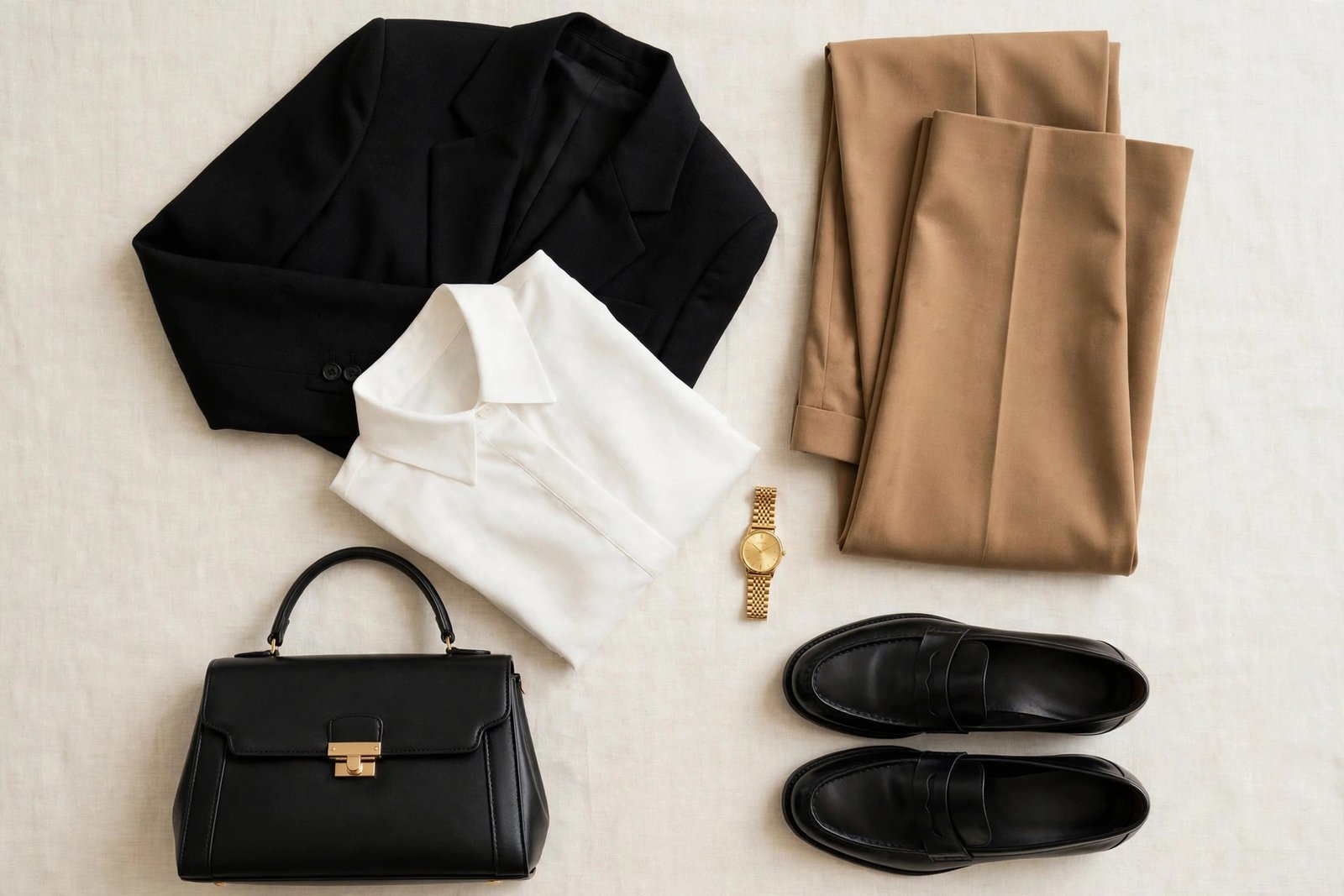
    Outfit = Tailored trousers + crisp button-down + blazer + classic black loafers

    For the Weekend: Let Them Relax

    For casual looks, suede and softer leathers work beautifully. Loafers add a smart edge to jeans, leggings, or relaxed chinos — try cuffed jeans so the shoe gets visual space, or pair loafers with a flowy dress and a denim jacket for an easy weekend outfit.

    The weekend formula is simple: straight-leg jeans (cuffed slightly) + a knit jumper or button-down shirt + any loafer style. The cuffed hem draws attention to the shoe, making it the focal point of an otherwise simple outfit. It is the quintessential weekend look, and it takes about four minutes to put together.

    Outfit = Straight-leg jeans (cuffed) + knit sweater + suede loafers

    The Loafer Types, and Where Each Shines

    • Classic loafers: Low heel, streamlined silhouette. The office default — clean lines for formal settings.
    • Penny loafers: A strap across the top with a small slit. Versatile enough to dress up or down; great with jeans and a tee or a casual blouse.
    • Tassel loafers: Decorative tassels on the vamp. Playful, and they work with both casual and semi-formal clothes — try them with a flowy dress or a midi skirt on weekends.
    • Moccasin loafers: Softer construction, more relaxed fit. Best for casual days, especially with straight-leg trousers and a structured shirt.
    • Platform loafers: A chunky sole that adds height without a heel. Pair with high-waisted wide-leg trousers and a tucked-in blouse — the low profile keeps trousers from dragging, and the platform adds height.

    Three Formulas to Steal

    The wide-leg trouser formula: Platform loafers + high-waisted wide-leg trousers + tucked-in blouse. The loafer’s low profile prevents the trousers from dragging, while the platform sole adds height. A go-to for professional women who want comfort and style.

    The midi skirt formula: Patent leather loafers + midi skirt + fitted top. The glossy finish contrasts beautifully with flowing skirt fabric. Choose a pointed-toe loafer for a more feminine look, or a round toe for casual ease.

    The blazer dress formula: Chunky chain loafers + blazer dress + structured tote. Polished and confident for meetings, lunches, and after-work drinks — all without changing shoes.

    Comfort Notes That Matter

    Loafers with a cushioned sole or rubber tread are noticeably more comfortable for long days on foot. If you walk a lot, look for a flexible sole and a secure fit — a loafer that slips at the heel will ruin an otherwise perfect outfit. And for travel, loafers are hard to beat: slip-on ease, comfort, and durability, all in a shoe that still looks like you tried.

    FAQ

    Can I wear loafers to a formal office?

    Yes, with a classic leather pair in black or brown, tailored trousers or a sheath dress, and a blazer. Keep the loafer clean and simple — no heavy hardware — and it reads as polished, not casual.

    What socks do I wear with loafers?

    No-show socks for a bare-ankle look, or thin ankle socks that do not peek out. In cooler months, a fine trouser sock in a matching dark color works with trousers.

    Are loafers comfortable for all-day wear?

    They are one of the most comfortable polished shoes, especially with a cushioned sole or rubber tread. The key is fit: a secure heel and enough room in the toe box.

    Can loafers work with dresses?

    Absolutely. Tassel or ballet-style loafers with a midi dress or skirt make a feminine yet practical weekend look, and a classic loafer with a sheath dress works for the office.

    Keep Reading on Chic Threads

    Save this one for the next time you reach for heels out of habit. Your feet will thank you, and honestly, so will your outfit.

  • Fall Capsule Wardrobe: 15 Pieces, 20 Outfits

    Fall Capsule Wardrobe: 15 Pieces, 20 Outfits

    Fall is the season that makes people buy the most clothes — and the season when a capsule helps the most. The weather changes daily, the layers pile up, and suddenly your closet is full but nothing goes together.

    Here is a different approach: fifteen pieces, all in one warm palette, that make twenty outfits. Not because you counted them on a spreadsheet, but because every piece was chosen to work with the rest.

    The 15 Pieces

    Outerwear (2):

    1. A camel wool coat — the piece that makes everything look expensive.
    2. A leather or structured jacket — for milder days and sharper shapes.

    Knitwear (3):

    1. A cream crew-neck sweater — soft, cozy, goes with everything.
    2. A fine-knit turtleneck in black — the layering base for the whole capsule.
    3. An oversized cardigan in gray or oatmeal — warmth without bulk.

    Tops (3):

    1. A white button-down shirt — crisp under knits and jackets.
    2. A striped long-sleeve tee — the casual piece that still looks intentional.
    3. A silk or soft blouse in forest green or burgundy — the accent color.

    Bottoms (4):

    1. Dark-wash straight-leg jeans — the everyday anchor.
    2. Black tailored trousers — for work and dressier days.
    3. A wool midi skirt in brown or charcoal — for a different silhouette.
    4. A knit or sweater dress in black — the one-and-done piece.

    Shoes (2):

    1. Black ankle boots — sharp, goes with every bottom in this list.
    2. Brown or tan boots — for softer, earth-tone days.

    The extra (1):

    1. A neutral scarf — the piece that makes the same outfit look different.

    The palette is the secret: warm earth tones — camel, olive, rust, chocolate brown — plus black, cream, and one accent. When everything lives in the same family, mixing is automatic.

    How 15 Pieces Become 20 Outfits

    Here is a week to prove it, with room to keep going:

    1. Camel coat + cream sweater + dark jeans + black ankle boots
    2. Leather jacket + striped tee + black trousers + tan boots
    3. Camel coat + black turtleneck + wool midi skirt + black ankle boots
    4. Oversized cardigan + white shirt + dark jeans + tan boots
    5. Leather jacket + silk blouse + black trousers + black ankle boots
    6. Camel coat + sweater dress + black ankle boots + scarf
    7. Oversized cardigan + cream sweater + wool midi skirt + tan boots
    8. White shirt under cream sweater + dark jeans + black ankle boots
    9. Black turtleneck + black trousers + leather jacket + black ankle boots
    10. Silk blouse + wool midi skirt + camel coat + tan boots
    11. Striped tee + dark jeans + oversized cardigan + tan boots
    12. Cream sweater + black trousers + camel coat + black ankle boots
    13. Sweater dress + leather jacket + tan boots + scarf
    14. White shirt + wool midi skirt + oversized cardigan + black ankle boots
    15. Black turtleneck + dark jeans + camel coat + scarf
    16. Silk blouse + dark jeans + leather jacket + black ankle boots
    17. Cream sweater + wool midi skirt + oversized cardigan + tan boots
    18. Striped tee + black trousers + camel coat + black ankle boots
    19. Sweater dress + oversized cardigan + black ankle boots
    20. White shirt + black trousers + leather jacket + tan boots + scarf

    Twenty outfits, fifteen pieces, and not one of them looks like you repeated yourself. The trick is that no outfit uses more than one “star” — the coat, the blouse, or the skirt leads, and everything else supports.

    The Rules That Make It Work

    • Start with neutrals, add one accent. Cream, black, camel, and gray carry the capsule; the blouse or the scarf is the color. One accent keeps everything mixable.
    • Every piece must earn its place. If a piece only works in one outfit, it does not belong in a capsule. Swap it for something that works in three.
    • Layer in the right order. A thin base (turtleneck or shirt), a middle layer (sweater or blouse), and outerwear (coat or jacket). Three thin layers beat one heavy one, and they adapt when the day warms up.
    • Two to three pairs of boots is enough. One black ankle boot for sharper outfits, one brown or tan boot for softer earth-tone looks. If you wear skirts often, a taller boot helps too — but it is a bonus, not a requirement.

    What to Add If You Want More

    If fifteen pieces feel tight, the first additions worth making are: a second scarf in your accent color, a pair of loafers for days you walk a lot, and a second knit in a different texture. Each one multiplies the outfits without breaking the palette.

    What not to add: a random bright piece that matches nothing, a second coat in a competing color, or a trendy item that only works with one outfit. Those are the pieces that turn a capsule back into a cluttered closet.

    FAQ

    How many pieces should a fall capsule have?

    Most guides land between 15 and 35 pieces for a season. Fifteen is a strong, honest starter set — enough for real variety, small enough that every piece gets worn.

    Do I need a dress in a fall capsule?

    You do not need many, but one simple knit dress in a dark neutral is very useful. It gives you a different silhouette without adding complexity, and it layers under coats beautifully.

    What colors work best for fall?

    Warm earth tones — camel, olive, rust, chocolate brown — plus black, cream, and gray. They layer well, they flatter most skin tones, and they feel like fall without trying.

    Can I build this capsule without buying everything new?

    Yes, and you should. Start with what you already own in these colors and shapes, and fill only the genuine gaps. A capsule is a way of using your closet better, not an excuse to replace it.

    Keep Reading on Chic Threads

    Save this one before fall shopping starts. Fifteen pieces, twenty outfits, and a closet that finally feels like it is on your side.

  • Bag & Shoe Sets: How to Match Your Bag to Your Shoes Without Matching Exactly

    Bag & Shoe Sets: How to Match Your Bag to Your Shoes Without Matching Exactly

    There is an old rule that says your bag and your shoes must match. It is time to retire it. Perfectly matching shoes and bag can actually look a little dated — like you bought them as a set and never thought about them again. The modern version is much more interesting: coordinate, don’t copy.

    Here is how to do it, with rules that work every time.

    Rule 1: Think Color Families, Not Copies

    Instead of matching red to red, think in families. Wine goes with nude. Burgundy goes with beige. Rust goes with brown. Blush goes with ivory. These combinations feel layered and intentional, while flat matching feels basic.

    A practical version: chestnut boots pair beautifully with a bag in caramel, tan, or rust. Black boots pair with charcoal, graphite, or a soft black leather in a different finish. Gray boots pair with dove, slate, or even muted pastels like dusty lavender.

    The test is simple: hold the bag and the shoes next to each other. If they look like cousins, not twins, you are there.

    Outfit = Dark jeans + chestnut boots + caramel crossbody + cream knit

    Rule 2: Let One Piece Lead

    Every elegant outfit has a leader. It is either the bag, or the shoes — never both. If your heels are bold, keep the bag simple. If your bag is a statement, keep the shoes clean.

    This is the rule that stops outfits from looking busy. A bright or patterned bag with quiet shoes reads chic. Bold shoes with a quiet bag reads chic. Both shouting at once reads like an argument.

    Outfit = Simple black dress + statement burgundy bag + nude heels

    Rule 3: Match the Texture Family

    Texture is the quiet signal that ties an outfit together. Matte leather goes with matte shoes. Suede goes with soft-finish shoes. Patent goes with sleek, polished footwear. Mixed textures without a plan create imbalance; similar textures create cohesion.

    You do not need the same material — you need the same feeling. A smooth leather bag with suede shoes can work beautifully, because both read soft and refined. A woven straw bag with patent shoes is a harder sell, because the two textures tell different stories.

    Outfit = Suede ankle boots + soft leather tote + knit dress

    Rule 4: Keep the Hardware Consistent

    This is a small detail with a big payoff. If your bag has gold hardware, choose gold-tone accessories. If it has silver hardware, match with cool tones. Mixed metals without intention cheapen the look; consistency signals refinement.

    You do not need to match every buckle and zipper — just the visible ones. Bag hardware, belt buckle, and jewelry in one metal family is enough to make the whole outfit feel planned.

    Rule 5: Match the Occasion First

    Context changes everything. The same bag-and-shoe logic plays differently depending on where you are going:

    • Work: Neutral bag + structured heels or loafers.
    • Date night: Soft metallics + mini bag + heeled sandals.
    • Travel: Tote + chic flats.
    • Events: Clutch + elegant sandals or heels.

    Start with the occasion, then pick the bag and shoes that suit it. Styling for the setting first is what separates an outfit that works from an outfit that just happens.

    Rule 6: Balance the Visual Weight

    Aim for balance by distributing visual weight evenly. If one piece is big, bold, or bright, the other should be quieter. Chunky boots pair best with a more minimal bag, so the outfit stays balanced. A large, statement tote pairs best with simpler shoes.

    This is also why a huge bag and chunky shoes together can feel heavy — there is nowhere for the eye to rest. Give it one star and one supporting player.

    The Power Trio: Your Shortcut Collection

    If you want to simplify all of this, build a small power trio. Three bags — black, nude, brown — and three shoes — black heels, nude heels, neutral flats. With those six pieces, you can style most outfits easily, because every combination already lives in the same color family.

    From there, add one fun bag or one bold shoe at a time, and use the rules above to pair it. That is how a collection grows without turning into a closet full of things that only go with one outfit.

    FAQ

    Do my shoes and bag have to match exactly?

    No. Perfectly matching shoes and bag is no longer a requirement in modern styling, and it can sometimes look dated. Coordinating complementary colors or textures looks more sophisticated.

    What if my bag is a bright color and I don’t have matching shoes?

    Let the bag be the star. Wear neutral shoes — black, nude, or tan — and let the bright bag do the talking. You do not need a shoe in the same color.

    Should my bag match my outfit or my shoes?

    Your outfit first. Bag and shoes should support the outfit, not fight it. Ask what your main color and mood are, then choose accessories that echo that energy.

    Does hardware really matter?

    More than most people think. Matching your bag’s hardware to your jewelry’s metal tone is one of the easiest ways to make an outfit look cohesive without any extra effort.

    Keep Reading on Chic Threads

    Save this one and stop hunting for exact matches. Cousins, not twins — that is the whole secret.

  • Brooch Styling: The 2026 Comeback Accessory — Exactly Where to Pin It

    Brooch Styling: The 2026 Comeback Accessory — Exactly Where to Pin It

    Somewhere in a drawer — yours, your mother’s, your grandmother’s — there is a brooch. For years it sat there, feeling like something from another era. This year, it is the accessory everyone is talking about.

    Pinterest named the brooch revival “Brooched” in its Pinterest Predicts 2026 report, and the pins have been showing up everywhere since: on coats, on sweaters, on bags, in places a brooch never used to go. Brooches also appeared on recent runway seasons, which is how a drawer piece becomes a trend. But you do not need a runway to wear one. You need one good pin, and one good placement.

    Here is exactly where to pin it.

    1. The Lapel — But Off-Center

    The classic placement still works, but the 2026 update is in the details. Instead of pinning dead center on your lapel, try slightly off-center, or higher, near the collar. One larger piece feels modern and graphic; a trio of tiny vintage finds reads like a conversation starter.

    Pin it about one to two inches below the shoulder seam on your dominant side. That placement catches the eye without looking like you followed a diagram.

    Outfit = Camel or black blazer + simple top + brooch off-center on the lapel

    2. The Scarf Knot

    This is the placement that gets the most compliments, and it is the easiest to try. Tie a scarf — silk, wool, any weight — and pin the brooch right at the knot. It holds the scarf in place and turns a simple accessory into a styled one.

    It works especially well with a plain coat and a solid-color scarf, because the brooch becomes the one interesting detail. If the scarf is already loud, pick a simple metal pin so the two do not compete.

    Outfit = Wool coat + solid scarf + brooch at the knot

    3. The Sweater Shoulder

    A brooch at the shoulder of an oversized turtleneck or cardigan instantly elevates the simplest outfit. This is the styling move all over Pinterest right now, and it is easy to see why: a plain sweater plus one beautiful pin looks like you got dressed on purpose.

    Use a medium pin on a chunky knit, and make sure the clasp is strong enough to grip thick fabric. Check the back after sitting down — heavy pins can shift on soft knits.

    Outfit = Oversized knit sweater + brooch at the shoulder + jeans or midi skirt

    4. The Waistband Cinch

    Here is where brooches stop being decoration and start doing a job. Use a brooch to cinch an oversized blazer at the waist, to gather a loose dress, or to close a cardigan that has no buttons. It creates shape where there was none, and it looks completely intentional.

    This is also the trick for making a boxy blazer feel like it was tailored. One pin at the waist, slightly to the side, and the whole silhouette changes.

    Outfit = Oversized blazer + brooch cinching the waist + straight-leg trousers

    5. The Bag Strap

    If you are brooch-curious but not ready to pin one to your clothes, pin it to your bag. A floral or enamel brooch on the strap of a tote, at the corner of a clutch, or on a canvas bag is low-commitment and very now. It makes a neutral bag feel personal and collected.

    This is also the best place to try a novelty or colorful enamel pin — the kind that might feel like too much on a blazer, but feels perfect on a bag.

    Outfit = Neutral tote or crossbody + enamel brooch on the strap

    6. The Cluster: The Advanced Move

    Three to five brooches of different sizes, pinned close together on a coat or a denim jacket, like a personal gallery. This is the maximalist version of the trend, and it works when you follow one rule: keep them in one metal family, or one theme, so it reads intentional rather than chaotic.

    Mix sizes — small, medium, large — and combine vintage and modern pieces. A cluster of gold-toned pins on a dark coat is the easiest version to pull off.

    Outfit = Dark wool coat + cluster of gold-toned brooches on one side

    Choosing Your First Brooch

    If you are buying or thrifting your first one, look for three types:

    • Heirloom: Cameos, filigree, faux pearls, tiny portraits. Best on structured wool — a camel blazer or a tweed coat.
    • Sculptural: Abstract modern shapes, oversized, often in brushed gold or silver. The fashion-editor choice: one big statement brooch on a minimalist black outfit.
    • Enamel and novelty: Colorful animals, flowers, and playful shapes. Perfect on denim jackets, knitwear, and bags.

    When thrifting, check the clasp (a working C-clasp or safety catch), the weight (heavier usually means better materials), and the back (maker’s stamps suggest genuine vintage). Skip anything with green corrosion on the pin unless you are prepared to clean it properly.

    FAQ

    Are brooches actually in style in 2026?

    Yes. Pinterest named the revival “Brooched” in its Pinterest Predicts 2026 report, and brooches have appeared on recent runway seasons. It is one of the year’s clearest accessory comebacks.

    Where is the best place to wear a brooch if I am trying it for the first time?

    Start with the scarf knot or the bag strap — both are low-commitment, and both look intentional immediately. The lapel is the classic next step.

    Can I wear a brooch on a sweater or coat?

    Absolutely — these are ideal surfaces. Use a larger, sturdier pin on a coat and a medium pin on a chunky knit, and check that the clasp grips thick fabric well.

    How do I style a brooch without looking old-fashioned?

    Wear it somewhere unexpected — a waistband, a scarf knot, a bag strap, or one collar point — and pair it with modern, simple clothes, so the pin reads as a deliberate detail rather than a costume piece.

    How many brooches can I wear at once?

    There are no rules. Wearing three or more clustered together is one of the biggest styling moves of 2026 — it reads as maximalist and intentional when kept in one metal family.

    Keep Reading on Chic Threads

    Save this one, then open that drawer. Your brooch has waited long enough.

  • Workwear Capsule: 10 Pieces, 15 Office Outfits

    Workwear Capsule: 10 Pieces, 15 Office Outfits

    If you open a closet full of clothes and still feel like you have nothing to wear, the problem is almost never the number of clothes. It is that the pieces do not work together. A workwear capsule fixes that by doing one thing: every piece matches at least three others.

    Here is a ten-piece capsule — built from the pieces that show up in nearly every workwear guide — and fifteen outfits you can make from it. No new shopping required to start; begin with what you already own and fill the gaps over time.

    The 10 Pieces

    1. A tailored blazer in black or navy — the single highest-impact piece in a work wardrobe.
    2. Tailored trousers in black — the anchor of the whole capsule.
    3. A second pair of trousers in gray or navy, for variety.
    4. A white button-down shirt — crisp, classic, goes with everything.
    5. A silk or soft blouse in a color you love — this is where personality enters.
    6. A fine-knit sweater in cream or camel — for layering and softer days.
    7. A wrap dress in a dark neutral — the one-and-done piece.
    8. A midi skirt in a dark neutral — for days you want a different silhouette.
    9. Loafers in black or brown — comfortable, polished, all-day shoes.
    10. A structured tote — the bag that pulls everything together.

    The palette rule that makes it work: three neutrals (black, white, navy or gray) plus one accent (your blouse, or a scarf). When everything lives in the same color family, mixing is automatic.

    The 15 Outfits

    Week 1 — the core five:

    1. Black trousers + white shirt + blazer + loafers (the meeting outfit)
    2. Gray trousers + cream knit + loafers (the soft Monday)
    3. Wrap dress + blazer + loafers (the polished one-piece)
    4. Black trousers + silk blouse + tote (the presentation day)
    5. Midi skirt + white shirt + blazer (the classic)

    Week 2 — swap the layers:

    1. Gray trousers + white shirt + blazer
    2. Black trousers + cream knit + blazer draped over shoulders
    3. Wrap dress on its own + tote (the warm-office day)
    4. Midi skirt + cream knit + loafers
    5. Black trousers + silk blouse + blazer

    Week 3 — dress it down, slightly:

    1. Gray trousers + silk blouse + loafers (no blazer)
    2. Midi skirt + silk blouse + blazer
    3. Wrap dress + cream knit layered over it as a top layer
    4. Black trousers + white shirt + tote, sleeves rolled (the casual Friday version)
    5. Gray trousers + white shirt + silk blouse layered under the blazer for a two-layer look.

    The point is not to memorize fifteen outfits. It is to see that ten pieces, all in the same palette, recombine endlessly. Swap the blazer for the sweater and you have five more. Swap the trousers for the skirt and you have five more again.

    Why This Works (and Why Bigger Closets Don’t)

    A capsule works because of a simple rule: every piece must go with at least three others. When a piece only works with one outfit, it is not a capsule piece — it is a costume. The ten pieces above pass the test because they are all neutrals and classics, and the only “statement” is the blouse color, which is easy to swap.

    It also saves real time. Workwear guides consistently note that a small, curated wardrobe cuts morning decision time dramatically — five minutes instead of thirty — because there are no wrong combinations to sort through.

    Making It Yours

    • Formal office? Lean on the blazer, the trousers, and the wrap dress. Keep the knit for Fridays.
    • Business casual? The knit, the blouse, and the midi skirt do more work, and the blazer becomes optional.
    • Casual workplace? Dark jeans can replace one pair of trousers — but only if your office dress code allows denim.
    • One metal tone. Pick gold or silver for buckles, bag hardware, and jewelry, and stick with it. Mixed metals without intention are what make mixed pieces look unplanned.

    Fabrics Worth Choosing

    Buy for how you will actually care for the clothes. If you will not visit a dry cleaner, look for hand-wash or gentle-cycle labels on everyday tops. Wool trousers and blazers hold up well and can often be aired out or steamed between cleanings. A handheld steamer is quicker than ironing, and hanging jackets and trousers on wide hangers keeps their shape.

    FAQ

    How many pieces do I need for a work capsule?

    There is no magic number. For most people, roughly 15–25 core pieces covers a full work wardrobe, but this ten-piece version is a strong starter set — and it already makes fifteen outfits.

    Do I need to buy everything at once?

    No. Start with the pieces that suit your current life — usually the blazer, trousers, and white shirt first, since that is already a meeting-ready outfit — and add items that fill genuine gaps.

    Can I include jeans in a work capsule?

    If your office allows denim, a pair of dark, well-fitting jeans works on casual days. Keep them dark and unripped, and pair them with the blazer so they read intentional.

    What if my office is very formal?

    Add a second blazer and a second pair of tailored trousers, and lean on the wrap dress and midi skirt less. The capsule structure stays the same; only the formality shifts.

    Keep Reading on Chic Threads

    Save this one and try the ten pieces for two weeks. You will be surprised how little you miss the rest of the closet.

  • Church Outfits for Women: Elegant, Modest & Modern

    Church Outfits for Women: Elegant, Modest & Modern

    Sunday mornings should feel peaceful — but somehow, choosing a church outfit can turn into a full closet meeting with no final decision. The goal is simple, even if getting there is not: respectful without looking dull, polished without feeling stiff, and pretty without trying too hard.

    The good news is that church style has a few reliable building blocks. Once you know them, Sunday gets a lot easier.

    The Building Blocks

    A good church outfit usually includes a few of the same pieces: a midi dress or a skirt that falls below the knee, a blouse with sleeves or a light layer over the shoulders, comfortable flats or low block heels, and soft colors that feel calm and feminine. Think sage green, navy, cream, dusty blue, lavender, blush pink, chocolate brown, and soft floral prints.

    The reason these pieces keep showing up is that they solve the actual Sunday problems: sitting comfortably through a service, standing to greet people, and going on to brunch or family lunch afterward without needing to change.

    Formula 1: The Midi Dress, Done Right

    A midi dress is the easiest church outfit there is. A-line or wrap styles are especially flattering, and sleeves — bishop sleeves, modest puff sleeves, or a simple three-quarter sleeve — add a graceful touch while keeping coverage comfortable.

    For daytime services, a floral or patterned midi in soft tones is perfect. For a more formal service, a solid color in a rich fabric like crepe or a soft jacquard reads more dressed up. Add a lightweight blazer or cardigan if the church runs cool, and low block heels or elegant flats.

    Outfit = A-line midi dress + lightweight blazer + low block heels + small crossbody

    Formula 2: The Skirt and Blouse

    If you are not a dress person, a skirt and blouse is the classic alternative — and it gives you more freedom to mix colors and textures. A midi or maxi skirt paired with a tailored blouse is polished and timeless.

    Try a pleated midi skirt with a silk or chiffon blouse, or a pencil skirt with a soft blouse in a complementary tone. A slim belt at the waist ties the two pieces together and keeps the outfit from looking like two separate ideas.

    Outfit = Pleated midi skirt + tailored blouse + slim belt + ballet flats or loafers

    Formula 3: Tailored Trousers and a Blazer

    For women who prefer trousers, a well-fitted pair with a modest top or blouse is a stylish and comfortable option. Wide-leg trousers with a blouse and a blazer look modern and elegant, and a light-colored suit in beige, mint, or pale pink is beautiful for spring and summer services.

    This is also the best option for cooler weather, when you want the coverage of trousers and the warmth of a proper layer. Add a long coat over the top and ankle boots, and you are set for a winter Sunday.

    Outfit = Wide-leg trousers + silk blouse + blazer + loafers or ankle boots

    Formula 4: The Long Dress for Special Sundays

    Some Sundays call for more: Easter, a christening, a holiday service, a family celebration. That is when a long, flowing dress earns its place. Flowing maxi styles in silk, chiffon, or crepe, with sleeves and a higher neckline, feel regal without being fussy.

    Keep the accessories delicate — small earrings, a simple pendant, a bracelet or a watch, and a clutch or small crossbody. The dress is the statement; everything else should whisper.

    Outfit = Flowing maxi dress + delicate jewelry + small clutch + low heels

    Fabrics and Colors That Work

    Soft, breathable fabrics like cotton, chiffon, lace, and crepe create elegant silhouettes while staying comfortable through a long morning. In cooler months, wool, jacquard, and velvet add richness and warmth.

    For color, the calm palette wins: sage, navy, cream, dusty blue, lavender, blush, chocolate. These colors photograph beautifully, they flatter most skin tones, and they never fight the setting.

    What to Avoid (Without Overthinking It)

    The only real rules are about fit and coverage: avoid sheer fabrics, very tight fits, and low necklines. Skip overly high heels — services involve standing, and comfort matters. And leave the sporty shoes at home; a clean flat or loafer is just as comfortable and looks far more intentional.

    FAQ

    Can I wear trousers to church?

    Yes. Well-fitted trousers with a modest blouse and a blazer are a stylish, modern church outfit, and a great option if you prefer not to wear dresses or skirts.

    What shoes are best for church?

    Low block heels, ballet flats, or loafers. You will be sitting, standing, and greeting people, so comfort matters as much as polish. Avoid very high heels and sporty footwear.

    How do I dress up a simple dress for a special service?

    Add a structured layer (blazer or tailored coat), delicate jewelry, and a small clutch. A belt at the waist also lifts a simple dress instantly.

    What colors work best for church?

    Soft, calm colors: sage green, navy, cream, dusty blue, lavender, blush pink, chocolate brown, and soft florals. They feel respectful and photograph beautifully.

    Keep Reading on Chic Threads

    Save this one for Saturday night. Sunday morning should be peaceful — your outfit included.

  • Teacher Outfit Ideas: 5 Polished, Comfortable Classroom Formulas

    Teacher Outfit Ideas: 5 Polished, Comfortable Classroom Formulas

    Teaching is one of the few jobs where you need to look professional, move like you are on a playground, sit on the floor for story time, and still look put together for a parent meeting at 3 p.m. That is a lot to ask of one outfit — which is why teachers need formulas, not just inspiration.

    These five formulas are built for real classrooms: comfortable shoes, layers you can peel off when the heat kicks on, fabrics that forgive a long day, and enough polish that you never feel underdressed.

    Formula 1: The Pull-On Trouser and Blouse

    This is the everyday hero. Pull-on trousers in a quality ponte knit or stretchy woven fabric look exactly like tailored trousers, but the waistband does not dig in after hours of standing, sitting, and moving between desks. Pair them with a relaxed but fitted blouse — a soft print, a solid jewel tone, or a classic stripe — tucked loosely at the front.

    Finish with comfortable flats or low block heels and a cardigan or blazer over the top. It reads as intentional, not fussy, and it feels good at 7 a.m. and at 3 p.m.

    Outfit = Ponte pull-on trousers + tucked blouse + cardigan or blazer + loafers

    Formula 2: The Shirt Dress, One and Done

    A knee-length shirt dress is a one-and-done outfit: throw it on, add opaque tights and low ankle boots, and you are dressed. Choose a stretchy or relaxed cut so you can move, and pick a print that hides the inevitable smudges.

    This is the formula for mornings when you have zero decision energy. The dress does all the work, the tights and boots make it season-appropriate, and you look like you planned it — even when you did not.

    Outfit = Knee-length shirt dress + opaque tights + low ankle boots

    Formula 3: Turtleneck, Pinafore, and Loafers

    A fine-knit turtleneck under a pinafore or jumper dress is cozy, playful, and endlessly teacher-appropriate. Finish with loafers you can walk miles in. It reads polished in photos and feels like a hug all day.

    This one is especially good in fall and winter, when you want warmth without a bulky coat indoors. The pinafore gives structure, the turtleneck gives warmth, and the loafers keep you moving.

    Outfit = Fine-knit turtleneck + pinafore dress + loafers

    Formula 4: The Sweater Dress and Tall Boots

    A midi sweater dress with tall flat boots is warm, simple, and takes zero brainpower. Add a long pendant or a scarf for a little polish. Choose a dress with some structure so it skims rather than clings after a long day.

    This is the formula to reach for on cold mornings when you want to feel wrapped up but still look like a grown-up. The boots do the heavy lifting — literally and stylistically.

    Outfit = Midi sweater dress + tall flat boots + long pendant or scarf

    Formula 5: Monochrome, Made Easy

    A simple black tee tucked into cream wide-leg trousers, with a slim belt and a structured tote. It is the ultimate capsule formula for teachers who want polish without overthinking the morning routine.

    The neutral palette pairs with almost anything already in your closet, and it reads professional and approachable — perfect for lecturing at the whiteboard or greeting parents at conferences. Swap the tote for a crossbody on casual days, and roll the trouser hem slightly for ankle-grazing length with loafers.

    Outfit = Black tee + cream wide-leg trousers + slim belt + structured tote

    The Classroom Rules Behind All Five

    • Layer in two complete pieces. Wear a light knit or blouse underneath and a cardigan, vest, or blazer over it, so you can take the top layer off by lunch and still look put together. Classrooms are cold in the morning and warm by afternoon — dress for both.
    • Shoes first, always. Loafers with cushioned soles, low block-heel ankle boots, and clean leather sneakers are the most comfortable classroom shoes. Add a cushioned insole to any of them if you stand most of the day.
    • Darker colors forgive. Olive, chocolate, burgundy, and navy hide chalk dust and marker far better than cream or pale gray — save the light colors for days without art projects.
    • Check your school’s dress code. Dark, unripped jeans are fine in many schools on casual days, but some districts still allow jeans only on Fridays. When in doubt, the handbook wins.

    FAQ

    Can teachers wear jeans to school?

    In many schools, yes — dark, unripped jeans with a blazer or a good sweater and loafers look professional. Check your school’s handbook first, since policies vary.

    What are the most comfortable shoes for teaching?

    Loafers with cushioned soles, low block-heel ankle boots, and clean leather sneakers. Comfort matters more than height when you are on your feet all day.

    How do I dress for a classroom that is cold in the morning and hot in the afternoon?

    Dress in two layers that each look complete on their own — a finished base layer plus a cardigan, vest, or blazer you can remove by lunch.

    Can I wear skirts in the classroom?

    Yes. Midi skirts with boots, or shorter skirts with opaque tights and knee-high boots, keep you warm and covered even when you sit on the floor with younger students.

    Keep Reading on Chic Threads

    Save this one for Sunday night, when you are planning the week. Five formulas, five days, no morning stress.